

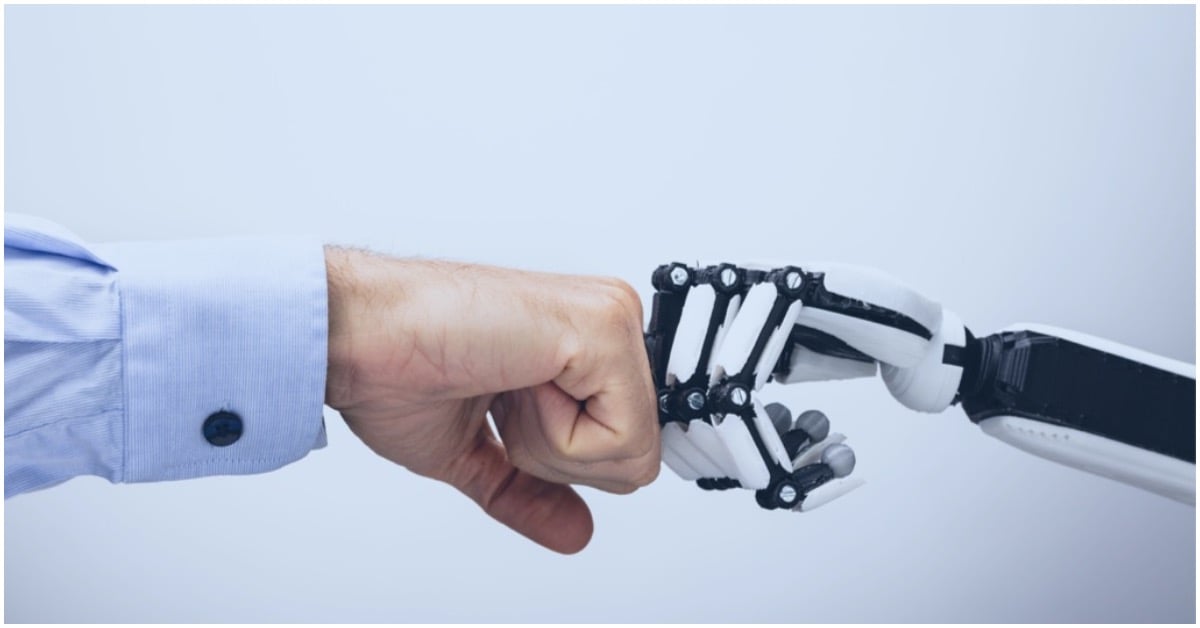
Human and machine collaboration is no longer a futuristic concept. It is now a practical reality transforming how organizations design, execute, and optimize workflows. From automation tools to advanced AI systems, machines are increasingly working alongside humans as partners rather than replacements. This shift is redefining productivity, decision-making, and operational efficiency across industries. Modern research highlights that the biggest value of AI does not come from isolated task automation but from redesigning entire workflows where humans and machines complement each other .
Intelligent Systems Driving Workflow Transformation
The integration of AI and automation into workplaces has created a new operational model where tasks are distributed between humans and machines based on strengths. Machines handle repetitive, data-heavy, and rule-based activities, while humans focus on creativity, strategy, and judgment. This synergy is reshaping industries such as finance, healthcare, education, and logistics.
Recent studies show that organizations are shifting from task-level automation to system-level workflow redesign, enabling smoother coordination between human decision-making and machine execution . This evolution marks a transition from simple productivity tools to intelligent ecosystems that actively support end-to-end operations.
www.pmkishan.net: Digital Systems Enhancing Administrative Workflows
Government platforms like www.pmkishan.net represent how digital infrastructure is streamlining administrative and service delivery workflows. These systems demonstrate human-machine collaboration by reducing manual processes and enabling faster access to information.
Such platforms highlight how digital tools assist humans in managing large-scale data efficiently. Instead of replacing human oversight, they enhance accuracy and transparency in governance-related workflows. This model shows how structured digital systems can support citizens while allowing human administrators to focus on verification and decision-making tasks.
CM Yuva Udyami Vikas Yojana: Technology Supporting Entrepreneurial Workflows
The CM yuva udyami vikas yojana illustrates how government-backed initiatives are integrating digital systems into entrepreneurial development workflows. These programs rely on technology platforms to manage applications, approvals, and monitoring processes efficiently.
Human-machine collaboration in such schemes ensures that aspiring entrepreneurs receive faster support while backend systems automate verification and data handling. Humans still play a key role in evaluation, guidance, and policy implementation, ensuring that automation remains balanced with contextual judgment and fairness.
http://www.kaverionline.net: Streamlining Land And Record Workflows
Platforms like http://www.kaverionline.net show how digitalization is transforming land and record management workflows. Traditionally, these processes involved heavy paperwork, manual verification, and long processing times. Today, digital systems automate record access, updates, and validation steps.
In this setup, machines handle structured data processing while humans manage dispute resolution, verification, and legal interpretation. This combination significantly reduces delays and improves transparency, showing how workflow efficiency increases when both human oversight and machine automation work together.
Upbocw योजना: Digital Governance In Welfare Workflow Systems
The upbocw योजना demonstrates how welfare systems are becoming more efficient through digital transformation and human-machine collaboration. Such platforms automate beneficiary registration, fund distribution tracking, and eligibility verification processes.
Machines handle data validation and processing at scale, while human administrators ensure compliance, fairness, and policy alignment. This hybrid model improves service delivery speed while maintaining accountability in governance workflows.
The Expanding Role Of Humans In Machine-Driven Workflows
As machines take over repetitive functions, human roles are evolving rather than disappearing. Employees are increasingly becoming supervisors of AI systems, interpreters of machine-generated insights, and designers of workflow strategies. This shift requires adaptability and continuous learning.
Studies indicate that organizations adopting AI are experiencing major changes in job structures, with new roles emerging around workflow management, AI oversight, and system optimization . This reflects a broader transformation where humans guide intelligent systems rather than compete with them.
Challenges In Human Machine Collaboration
Despite its benefits, human-machine collaboration introduces challenges such as skill gaps, data governance concerns, and workflow redesign complexity. Many organizations struggle to integrate AI effectively into existing processes without disrupting operations.
However, experts emphasize that success depends on balancing automation with human oversight. Systems must be designed to ensure that decision-making remains transparent and accountable, even as machines handle larger portions of execution.
The Future Of Workflow Design
The future of workflows lies in deeply integrated human-machine ecosystems. Instead of static job roles, organizations will adopt fluid task structures where humans and AI continuously exchange responsibilities. This will lead to faster innovation cycles, improved efficiency, and more personalized services across industries.
Research suggests that this transformation is already underway, with organizations restructuring workflows around AI-driven systems that enhance both productivity and decision-making quality .
Conclusion
Across industries, human-machine collaboration is fundamentally reshaping workflows. From governance platforms like www.pmkishan.net to welfare systems such as upbocw योजना, and from entrepreneurial programs like cm yuva udyami vikas yojana to digital record systems like http://www.kaverionline.net, the integration of technology and human intelligence is redefining how work is performed. Rather than replacing humans, machines are enhancing their capabilities, creating a future where collaboration, not competition, defines productivity.