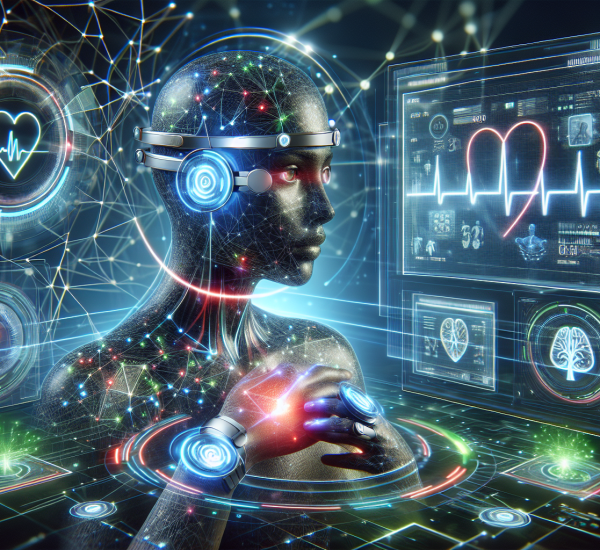
The loudest name in neural tech is not always the best map of where the field is going. Brain Computer Interface Technology now covers implanted arrays, blood-vessel devices, surface electrodes, speech systems, wearables, and software that turns messy brain signals into usable commands. For U.S. readers following serious technology coverage, the bigger story is less about one billionaire-backed company and more about the slow march from lab demo to daily help. The near future will not look like people casually browsing the web with thoughts alone. It will look like a person with ALS selecting an iPad app, a stroke survivor hearing a synthetic version of her own voice, or a veteran with limb loss controlling a device with less fatigue. That sounds smaller than science fiction. It matters more. The companies that win here may be the ones that make the tech boring enough for hospitals, insurers, caregivers, and families to trust.
The Race Is Wider Than the Neuralink Spotlight
Neuralink gets the headline because it has spectacle: a surgical robot, a famous founder, and videos that travel fast online. That attention has value, but it also warps the public picture. The BCI field is not a single lane. It is a crowded highway with different routes, different risks, and different ideas about what “progress” means.
Why the best progress may look less dramatic
A flashy implant can record detailed signals, but medical adoption rarely rewards drama alone. Doctors ask calmer questions. Can the device stay safe? Can the patient use it at home? Can a caregiver troubleshoot it? Can the company prove benefit without turning each user into a one-person science project?
That is where neural interface devices become less like gadgets and more like long-term care tools. The FDA’s guidance for implanted BCI devices points developers toward testing, clinical design, risk review, and patient protection, not media-ready demos. The agency also frames these systems around people with paralysis or amputation who need restored motor or sensory ability, which keeps the focus on medical use rather than consumer fantasy.
The non-obvious point is this: a device that records less brain data may reach more people if it fits the medical system better. A lower-risk route can beat a higher-bandwidth route when the real goal is broad access.
The vascular approach changes the surgery conversation
Synchron offers a useful example because it does not copy the open-skull story. Its Stentrode system enters through a blood vessel, in a manner the company compares to a stent procedure, and Synchron says it is studying the device in the U.S. and Australia for people living with paralysis. It also states that the system remains investigational and lacks commercial approval.
That matters for American families weighing risk. A person with advanced ALS may accept a risk profile that a healthy gamer would never accept. A neurosurgeon may feel differently about a device that rests in or near a blood vessel than one that places threads into brain tissue. The signal may differ, but the clinical doorway may open wider.
This is the trade-off that headline stories often miss. The question is not “Which device reads minds best?” The better question is “Which device can help a specific patient do a specific task with an acceptable burden?”
Where Brain Computer Interface Technology Is Actually Moving Next
The next stage is not about one perfect implant. It is about matching the right sensor, decoder, interface, and daily routine to the right person. Once you look at the field that way, the progress becomes easier to see and harder to hype.
Speech restoration is becoming the emotional center
Cursor control gets attention because it is easy to film. Speech restoration hits deeper. If you have ever watched a loved one lose speech after stroke, ALS, or injury, you know the issue is not only speed. It is timing, tone, and the ability to interrupt dinner-table chatter without waiting for a screen to catch up.
NIH reported on a 2025 brain-to-voice system that translated speech-related brain activity into audible words with much less delay than earlier work. The research involved a woman who had lost speech after a stroke, and the system used deep learning to produce spoken output from attempted speech.
That kind of assistive neurotechnology is not a parlor trick. It sits close to identity. A slow text system can help a person communicate, but fluent speech lets them argue, joke, comfort a child, or say no at the exact moment no matters.
Everyday interfaces may matter as much as electrodes
Apple’s developer documentation now includes a BCI Human Interface Device reference for connecting compatible hardware to Apple platforms. That sounds like a small software plumbing detail, but it hints at a future where BCI makers do not have to build every screen, menu, and accessibility path from scratch.
For users, this could be the difference between a medical demo and daily life. A person does not want “a neural system” in the abstract. They want Messages, FaceTime, email, banking, smart lights, and a way to call for help. The interface layer may decide whether a device leaves the lab.
The counterintuitive lesson is that the most powerful piece of the BCI stack may not sit in the skull. It may sit in the operating system, where a brain signal becomes a normal click, swipe, or selection. That is why accessible smart device design belongs in the same conversation as implants.
Invasive, Surface, and Wearable Systems Are Solving Different Problems
Public debate often treats BCI paths as a winner-take-all contest. That is too simple. Penetrating electrodes, surface arrays, vascular implants, and non-invasive BCI headsets all pay different prices for signal quality, comfort, safety, and daily setup.
More signal is not always more useful
Deep or penetrating implants may capture fine neural detail. That can help with fast cursor movement, speech decoding, or complex hand intent. Yet finer data often comes with harder surgery, harder long-term safety questions, and more pressure to prove that the gain is worth the risk.
Surface systems aim for a middle road. Precision Neuroscience said in 2025 that the FDA cleared its Layer 7 Cortical Interface for recording, monitoring, and stimulation on the brain’s surface, with commercial use allowed for implantation periods up to 30 days. The company described the array as part of a fully implantable wireless BCI system still in development.
That does not mean surface arrays replace deeper implants. It means the field is breaking into use cases. Short-term brain mapping in surgery is not the same as a permanent home communication device. The patient, task, and timeline decide what “better” means.
Wearables will win some jobs and lose others
A non-invasive BCI sounds attractive because nobody wants brain surgery for a weak use case. EEG caps and related wearables can support research, wellness, focus tracking, gaming experiments, and some assistive controls. They also face a hard physics problem: the skull, scalp, hair, movement, and electrical noise all sit between the brain and the sensor.
That does not make wearables useless. It makes them honest tools for narrower jobs. A non-invasive BCI may work well enough for simple selection, attention monitoring, or training feedback. It may fail when someone needs fast, accurate speech from a noisy home environment.
For the U.S. market, this split will matter. Insurers may support implanted medical devices for severe disability before they ever support consumer wearables for convenience. Schools, rehab clinics, and home health providers may adopt lower-risk systems sooner, but only for tasks where accuracy demands stay modest.
The Hard Part Is Trust, Not Mind Reading
The phrase “mind reading” sells clicks, but it muddies the issue. Most systems do not read private thoughts like a diary. They decode trained patterns tied to movement, attempted speech, or task intent. The scary part is not magic. It is data handling, medical dependency, and who controls the device after it enters someone’s life.
Patients need proof that survives ordinary days
A lab room can hide weakness. Home life exposes it. Pets bark. Wi-Fi drops. Caregivers change shifts. A user gets tired. Hair, sweat, medication, sleep, and mood can all affect performance depending on the system. A device that works for one hour under staff supervision still has to survive Tuesday afternoon.
That is why the FDA’s focus on clinical study design and home-use factors matters. A BCI must prove more than signal capture. It has to show that users, caregivers, and clinicians can manage the system without turning daily life into a maintenance ritual.
Assistive neurotechnology should reduce dependency, not create a new form of it. A person who can send a text only when two engineers visit the house is still waiting on other people. Real independence begins when support fades into the background.
Privacy fears should be specific, not theatrical
The public often jumps straight to stolen thoughts. The more grounded concern is narrower and more useful: neural data could reveal patterns about intent, fatigue, attention, movement attempts, or speech attempts. That data deserves medical-grade protection because it is tied to the body and the person.
A future BCI user should know who stores their data, how long it stays, whether it trains algorithms, and what happens if the company shuts down. These are not side issues. They decide whether people trust neural interface devices enough to invite them into bedrooms, wheelchairs, clinics, and family routines.
The non-obvious insight is that trust may become a product feature. The firm with the clearest consent tools, repair plan, data rules, and exit path may beat the firm with the flashiest demo. In health tech, fear does not vanish because a video looks cool.
Conclusion
The next chapter of neural tech will be won in clinics, living rooms, rehab centers, and software settings menus. It will not belong to a single company, and it will not arrive as one dramatic consumer launch. The smarter view is slower, but it is also more hopeful. Brain Computer Interface Technology is becoming a field of choices: invasive for high-bandwidth needs, surface-based for certain clinical windows, vascular for lower surgical burden, and wearable for lighter tasks. That mix is healthy. It means the field is growing past one storyline and toward real patient matching. Americans watching this space should ask practical questions first. Who benefits? What risk do they take? What task improves? What happens after the demo ends? The future will not be “thought control” for everyone. It may be something better: a person getting one piece of their agency back, and keeping it.
Frequently Asked Questions
Is BCI technology already available for regular consumers?
Some wearable systems are sold for research, wellness, or experimental control, but medical-grade implanted systems for communication and movement support remain tightly studied. Most serious clinical uses still involve trials, hospital teams, and strict eligibility. Consumer convenience is not the main market yet.
How is Neuralink different from other BCI companies?
Neuralink uses a high-channel implanted approach with thin threads placed in brain tissue. Other firms pursue vascular implants, surface arrays, or external sensors. The best choice depends on the medical task, surgical risk, signal needs, and how the system performs outside the lab.
Can a BCI help people with ALS communicate?
Yes, some systems aim to help people with ALS select letters, control devices, or produce speech-like output. The strongest promise is for people who retain thinking and intent but lose muscle control. Access still depends on trial status, health condition, and device approval.
Are non-invasive BCI devices safer than implants?
They avoid brain surgery, so the physical risk is lower. The trade-off is weaker and noisier signal capture. That makes them better for simpler tasks and less reliable for high-speed speech or fine control. Safety alone does not make a system useful.
What is the biggest barrier to BCI adoption in the United States?
The main barrier is proof in daily life. Companies must show safety, clear benefit, manageable care, data protection, and support after implantation or setup. Hospitals and insurers will not move on hype alone, even when early results look promising.
Will BCIs let people control phones with their thoughts?
Some systems already show phone or tablet control through trained brain signals and accessibility tools. The near-term version is closer to selecting, clicking, and navigating than open-ended mind reading. That is still meaningful for users who cannot rely on hands or speech.
Can BCI systems restore natural speech after stroke?
Research is moving in that direction, especially for people who can still attempt speech mentally but cannot speak aloud. The hardest part is speed, accuracy, voice quality, and long-term reliability. Clinical use will need careful testing before broad access.
Should healthy people expect BCI implants soon?
No. The risk-benefit case is weak for healthy users. Implants make more sense when disability is severe and the possible gain is large. Healthy consumers may see wearable experiments first, but medical need will drive the serious market for years.