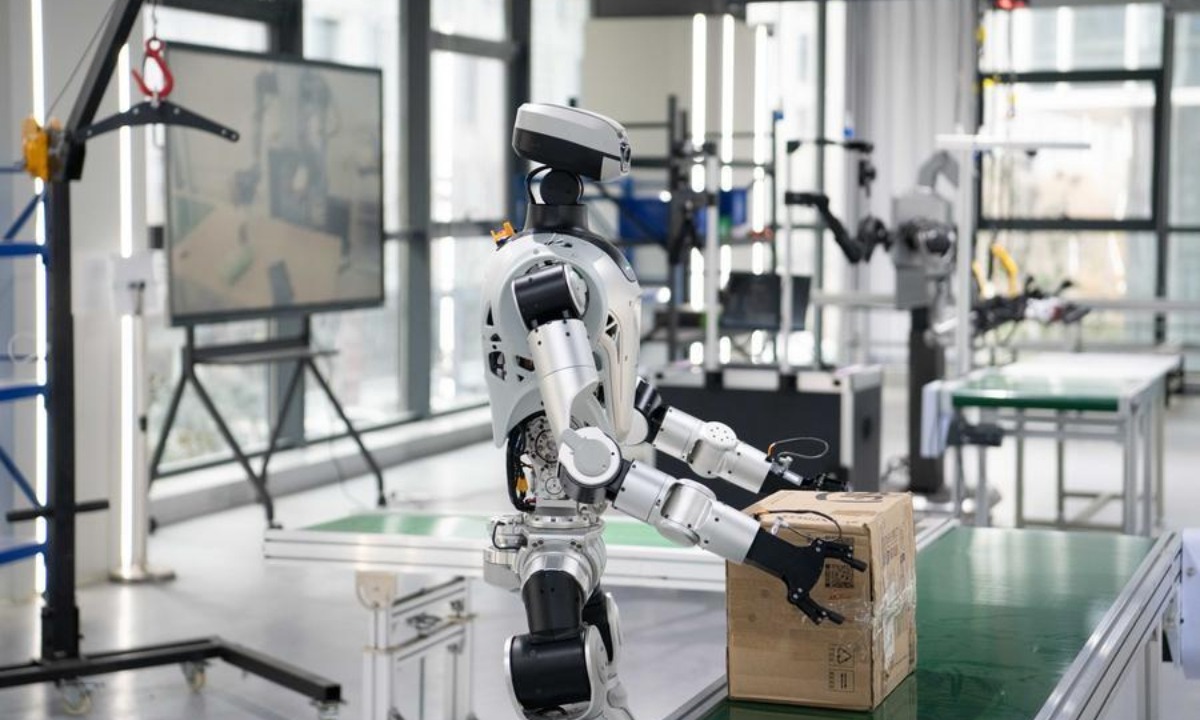
Factory floors do not care about viral demo videos. They care about uptime, takt time, injury risk, missed shifts, and whether a machine can repeat a task after lunch with the same patience it had before lunch. Humanoid Robot Manufacturing is already moving from conference-stage theater into early factory work, but the winning use cases are plain: moving totes, feeding parts, carrying kits, sorting bins, and helping with repetitive inspection.
That may sound less exciting than a robot building a full car. Good. Real factories reward boring success. For U.S. manufacturers, the smarter question is not whether humanoids will arrive, but which jobs they can touch first without slowing everyone else down. Readers tracking manufacturing technology stories will see a pattern: the first wave is not a robot army. It is a cautious layer of flexible labor around work cells built for humans.
The timeline starts with narrow pilots, then moves into repeatable shifts, then limited expansion across plants. The last step, broad line-side adoption, takes longer because factories punish small errors fast.
Why Factory Humanoids Are Starting With Boring Jobs
The first useful factory humanoid will not be the one that looks most human. It will be the one that can handle a dull task without creating drama. That is why early programs focus on intralogistics, kitting, tote movement, and light inspection. Those jobs sit close enough to production to matter, but far enough from the main assembly sequence to keep risk under control.
A plant manager in South Carolina or Ohio does not need a robot to impress visitors for ten minutes. They need it to move the same container 400 times, avoid a cart in the aisle, stop when a worker steps too close, and recover from a bad grip without calling an engineer every hour. That plain work tells you more than a dance routine ever could.
The counterintuitive part is that humanoids may win first where fixed automation looks too expensive. A conveyor, cage, or six-axis arm can be better for high-volume work. Yet many factories have messy gaps between those systems. People fill those gaps today because the layout was built around shoulders, hands, stairs, racks, doors, and carts.
Why tote handling beats shiny demos
Tote handling is not glamorous, but it is a smart proving ground. The objects are familiar, the path can be mapped, and the expected motion is easy to audit. If an industrial humanoid robot can lift a container from a rack, place it on a cart, and repeat the cycle through a shift, a manufacturer gets usable data without betting the whole line.
That matters in U.S. plants where labor gaps often appear in the least celebrated jobs. A worker may not leave because the job is difficult to understand. They leave because the motion is tiring, the schedule is tough, or the role offers no clear path upward. A robot that absorbs the worst repetition can make the human job more stable.
There is another quiet benefit. Tote work teaches the robot the plant. It learns the floor, the lighting, the rack heights, the scuffed labels, and the little human habits that do not show up in a clean lab. That is the raw material of real factory deployment.
Why old factory layouts favor legs, not wheels
Wheeled robots are excellent in open lanes. The problem is that many factories are not clean diagrams. They have narrow turns, temporary pallets, step-ups, uneven transitions, and crowded zones where a cart, a person, and a forklift all want the same space. A legged robot can be useful in places where the floor was never designed for full automation.
That does not mean legs solve everything. Biped walking adds energy demands, balance risk, maintenance concerns, and speed limits. A humanoid that walks poorly is worse than a cart that rolls well. The form factor pays off only when the plant needs a machine to work in a human-shaped area without rebuilding the area first.
BMW’s work with Figure at Plant Spartanburg gave the industry a concrete example of this logic. The point was not to prove that a humanoid could look impressive beside a vehicle. The point was to test whether a human-sized robot could perform repeated handling tasks in a live production environment. That is the bridge from video clip to factory decision.
Humanoid Robot Manufacturing Deployment Timeline for Real Plants
The most honest factory automation timeline is slower than investors want and faster than many skeptics expect. The next phase is not mass replacement. It is measured expansion from one task, one zone, and one shift into small fleets that can survive ordinary factory mess.
For American manufacturers, a realistic path has four stages. The first is technical evaluation, usually away from the most sensitive line work. The second is shadow production, where the robot performs work while humans watch and measure failures. The third is daily shift operation in a limited role. The fourth is multi-site rollout for proven tasks. Each stage can look small from the outside. Inside a plant, each one is a big trust test.
The non-obvious friction is not the robot’s hand. It is the recovery plan. Factories can forgive slow speed during a pilot. They cannot forgive confusion when a tote is missing, a label is damaged, a battery runs low, or the robot blocks an aisle during a rush.
What the next 12 to 24 months may look like
In the next 12 to 24 months, industrial humanoid robots will likely gain more work in material handling, parts delivery, simple inspection, and staging. These jobs do not demand full human skill. They demand consistency in narrow boundaries. That is where the first return can show up.
A typical U.S. pilot may begin with one or two robots in a warehouse area feeding a production cell. The robot brings kits to workers, removes empty containers, scans parts, or moves standard loads between marked zones. Engineers watch cycle time, grip errors, route blockages, battery swaps, near stops, and worker interruptions.
The best early projects will feel almost disappointing. No big reveal. No line shutdown party. A robot shows up in the same aisle every day and slowly becomes less interesting. That is a sign the factory is winning.
What has to happen before plants trust more shifts
Before a factory trusts a humanoid across more shifts, three things need to settle: safety, service, and repeatability. Safety means the robot knows when to slow down, stop, reroute, or ask for help. Service means parts, technicians, software updates, and support are available before a minor fault becomes a week-long hole in the schedule.
Repeatability is the hard one. A robot might perform well in a morning demo and still fail on second shift when lighting changes, carts move, workers rotate, or parts arrive in a different container. Real factory deployment exposes those tiny differences. That is where many confident roadmaps meet concrete.
The plants that move fastest will not be the loudest buyers. They will be the ones with clean task design. They will define the job in plain terms, remove needless variation, train workers early, and give supervisors a way to pause the robot without turning the pilot into a blame game.
Safety, Labor, and the Hidden Cost of Shared Floors
The factory floor is not a neutral stage. It is a working space full of habits, shortcuts, pressure, and noise. A humanoid robot enters that space as both a machine and a symbol. Workers may see relief from tiring motion. They may also see surveillance, speed pressure, or a quiet warning about future headcount.
This is where leadership matters. If management presents humanoids as a magic fix, workers will resist even useful tools. If leaders explain the task, the limits, the safety rules, and the reason for the pilot, the tone changes. People do not need a speech about the future. They need to know what happens on Tuesday when the robot stops in front of their station.
For U.S. companies, safety planning should start before procurement. OSHA notes that robotics does not sit under one single dedicated OSHA robotics standard, so employers still need to study related standards, hazard controls, and workplace duties through resources such as OSHA robotics safety guidance. That matters because humanoids blur lines between mobile robots, collaborative systems, powered equipment, and software-driven decision tools.
Why safety signs will not be enough
A sign on the floor does not make a shared workspace safe. Neither does a painted lane. Humanoids move in ways workers are still learning to read. A slow arm swing, a step backward, or a delayed stop can feel different from a forklift horn or a robot arm inside a guarded cell.
Good safety design must include speed limits, force limits, sensor checks, emergency stops, route rules, worker training, and incident review. It also needs one plain answer: who owns the robot at 2:14 p.m. when something odd happens? If everyone owns it, nobody owns it.
The hidden cost is attention. Workers near a new robot may watch it more than their own task for the first few weeks. That distraction has value as feedback, but it also has risk. A careful pilot treats worker attention as part of the system, not as background noise.
How workers decide whether the program survives
Workers judge technology by whether it makes the shift better or worse. If the robot creates more waiting, more cleanup, more alerts, or more supervisor pressure, the program loses trust. If it removes a sore-shoulder task and gives people clearer work, the mood changes.
One smart move is to let experienced operators help choose the first task. They know which movements drain energy, which aisles clog, which parts arrive late, and which “simple” job is simple only on paper. Their input can save months.
There is a counterintuitive truth here: a slower robot may succeed before a faster one. If workers can predict it, trust it, and recover around it, speed can improve later. A fast machine that surprises people becomes a safety problem, even when the spec sheet looks strong.
How U.S. Manufacturers Should Prepare Without Overbuying
The worst way to prepare is to order humanoids because a competitor made a press release. The best way is to map painful work, then ask which tasks need human-shaped mobility rather than another cart, arm, conveyor, or process change. A plant that skips this step may buy an expensive answer to the wrong question.
Start with jobs that are dull, repeatable, and close to a measurable cost. Look for high turnover, ergonomic strain, frequent missed moves, or overtime caused by material flow. Do not start where the task carries hidden judgment, messy exceptions, or direct impact on final product quality.
The factory automation timeline should be built around evidence, not hope. A small pilot with clean metrics beats a bigger pilot with vague excitement. This is also a good place for planning content such as an industrial AI safety checklist or a factory automation planning guide, because every plant needs a common language before vendors arrive.
Where a first pilot should begin
A first pilot should begin at the edge of production, not at the heart of it. Material staging, empty container removal, line-side replenishment, and simple scan-and-move work are good candidates. These jobs have value, but they give the plant room to pause without wrecking output.
The pilot area should be plain. Good lighting, marked zones, standard containers, clear routes, and trained workers make the first test fair. A chaotic corner may reveal future problems, but it can also bury the team in noise before they learn anything useful.
A manager should resist the urge to test everything at once. One robot, one path, one task, one shift pattern. Then measure. After that, add variety with care. This is how a plant learns whether industrial humanoid robots fit its work or only fit its slide deck.
What to measure before adding more units
The first metric is not how human the robot looks. The first metric is completed cycles without rescue. Then come near stops, blocked routes, battery performance, grip failures, part damage, worker delay, maintenance time, and supervisor intervention. These numbers tell the truth.
Cost matters, but return on investment should not be treated as a single payback line. A robot may reduce injury risk, protect output during hiring gaps, support weekend work, or make a hard-to-staff role easier to cover. Those gains are not all the same. Count them separately.
Before adding more units, ask one blunt question: did the robot make the system calmer? If the answer is no, expansion will multiply problems. If the answer is yes, the plant may be ready for the next narrow role in the broader real factory deployment path.
Conclusion
The factory future will not arrive as a single switch from human labor to humanoid labor. It will arrive in small jobs that stop feeling strange. A robot moves totes. Then it brings kits. Then it inspects parts. Then a supervisor trusts it across a longer shift.
That is the honest promise of Humanoid Robot Manufacturing today: not a sudden takeover, but a practical answer to tiring, repeatable work in places built for people. The timeline will favor companies that are patient enough to test small and disciplined enough to measure what happens.
For U.S. manufacturers, the next advantage is not owning the most advanced robot. It is knowing where a robot belongs, where it does not belong, and how to bring workers into the plan before fear fills the gap. Start with the dull task nobody wants to own, make it safer, measure the outcome, and build from there.
Frequently Asked Questions
How soon will humanoid robots work in American factories?
Some are already being tested in factory and warehouse settings, but broad adoption will take several years. The near-term path is narrow: material movement, kitting, tote handling, and inspection support. Full line-side work needs stronger safety proof and steadier shift performance.
What factory jobs will humanoid robots do first?
They will likely start with repetitive movement tasks: carrying parts, moving totes, removing empty containers, feeding workstations, and scanning items. These jobs are easier to define, easier to measure, and safer to pause than final assembly or quality-critical work.
Are humanoid robots better than normal industrial robots?
Not for every job. Fixed robot arms, conveyors, and wheeled mobile robots often beat humanoids in speed, cost, and reliability. Humanoids make more sense when a factory needs human-shaped movement in areas that were not designed for automation.
Will factory humanoids replace workers?
They will replace some tasks before they replace whole jobs. The early value is reducing tiring, repetitive work and covering hard-to-staff roles. Plants that use them well may shift workers toward monitoring, troubleshooting, quality checks, and higher-skill production support.
What makes real factory deployment harder than a demo?
Factories have changing light, blocked aisles, tired workers, rushed schedules, damaged labels, and odd exceptions. A demo shows capability. Daily deployment shows whether the robot can recover from small problems without slowing production or creating safety concerns.
How should a manufacturer choose a first robot pilot?
Pick one repetitive task with clear start and end points, standard objects, safe routes, and measurable output. Avoid the most complex station. A good pilot should answer whether the robot helps the system, not whether it can perform a stunt.
What safety steps matter most before adding humanoids?
Start with hazard assessment, route planning, speed limits, stop rules, worker training, emergency procedures, and clear ownership. Supervisors and operators need to know how to pause, report, and recover the robot without confusion during a live shift.
Is the humanoid factory trend worth watching now?
Yes, especially for manufacturers with labor gaps, ergonomic strain, or flexible material handling needs. The technology is not mature enough for blind buying, but it is mature enough for serious planning, task audits, and small controlled pilots.